Gardening diary: July
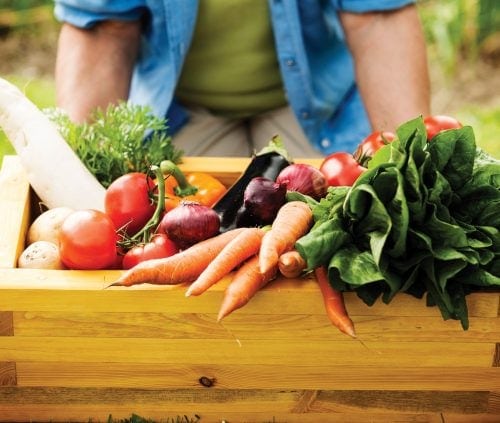
This month, David Haynes begins a new series: step-by-step guides on how to progress your edible garden each month.
Step 1 While my plot is east facing, it has been chosen as my vege garden site as it:
- gets sun (nearly) all day
- is sheltered from strong winds
- drains and does not get waterlogged
- is easy to access
- is near a water supply and compost pile
Step 2 While all grasses and weeds are pulled up and composted, this season’s marigolds are chopped straight into the soil as these act as a great chemical deterrent to tuber-eating worms such as nematodes.
Step 3 Next, the soil is turned over to a fork’s depth or down to no deeper than where the clay lies. If you’re lucky enough to have a soil which is not hard or compacted, you can get away without the dirty digging.
Step 4 To break up any clay in the soil sprinkle some gypsum (calcium sulphate) over the dug-over soil — this improves drainage without altering the pH of the soil. The pH is the measure of how acidic or alkaline a substance is. Soils should generally be around pH7 (neutral). It is worth investing in a soil-testing kit to keep an eye on the pH level as it is a major determinant in not only what but how well plants grow.
Step 5 Organic matter is now added to the soil. In my case, I spread on a generous layer of fresh horse manure and leave it on the top to decompose and act as a mulch. By next spring this will have been turned into plant food by the myriad micro-organisms in the soil.
Step 6 Finally, to ensure your hard work is not translated as a playground or toilet by chooks and/or cats, use netting to protect your new vege patch from such invasions and retire indoors for a well-earned drink.
Gardening Q&A
Q. Why does my broccoli always go to seed before it’s ready?
Andrea, Palmerston
A. There are several reasons why this may be happening:
Lack of nutrients: Broccoli needs plenty of food, particularly nitrogen, for green, leafy growth. Before planting, dig in well-rotted manure, compost or a nitrogen-rich fertiliser. Then give a monthly feed around the base of the plant.
Time of planting: Flowering in some plants is determined by the ratio of daylight to darkness hours. If you plant in high summer, fewer daylight hours in autumn can cause bolting.
Temperature: Brassicas grow good tight heads in cooler temperatures so plant in early spring or autumn. If brassicas are grown in a hot, dry location, they run to flower.
Lack of water stresses plants which results in early flowering. So keep soil moist by regular watering and apply a thick mulch over the soil (but not touching plant stems).
Root damage: Avoid touching the fine root hairs as damage may cause premature flowering.
Particular cultivar: Some cultivars (named varieties) of broccoli are more suited to one area versus another. Try several varieties to find the best one for your garden
Not enough cutting: Keep cutting because if you leave the king-head on the plant, the whole plant will bolt to flower.
www.healthyfood.com

 Achieve your goals
Unlock your ultimate healthy eating toolkit
Get instant access to everything you need to plan, shop and eat well in one place.