Ultra-processed foods: The lowdown on the latest food ‘baddie’
What are ultra-processed foods? How do they affect our health and how can we make better choices when food manufacturers work hard to make them tastier, longer lasting and more convenient than whole or minimally processed food?
All over social media, so-called ‘wholefood diets’ are trending, while the collective finger of blame for all our health woes is firmly pointed at ‘ultra-processed’ foods (UPFs).
UPFs, typically energy-dense foods that are high in fat, sugar and salt, low in fibre and have a long shelf life, are demonised by wellness influencers and US politicians alike.
At Healthy Food Guide, we try to steer clear of extreme views in our dietary advice and think fearmongering about any food group has the potential to damage our relationship with what we eat.
But the mounting body of evidence linking UPFs to a range of chronic health conditions, accompanied by the unhelpful rhetoric online, means clear, science-backed practical guidance on healthy eating patterns is more important than ever.
There is evidence that the displacement of long-established dietary patterns by UPFs is a key driver escalating the burden of multiple diet-related chronic diseases.
Studies have associated excess UPF consumption with increased risk of weight gain, hypertension, type 2 diabetes, chronic obstructive pulmonary disease, cancer and other conditions.
We know eating a plant-focused diet that‘s mostly made up of ‘whole’ or minimally processed foods, is the recommended foundation for a healthy eating pattern. But putting that into practice when our food environment is working against us is tricky.
How worried do we need to be about UPFs? And how are we meant to limit them when most packaged foods in our supermarkets are considered ultra-processed?
Let’s dig into the basics.
WHAT ARE UPFS?
This is the million-dollar question and part of the reason it’s not easy to make clear recommendations around UPFs. Nutrition is nuanced and complex, and defining UPFs is no exception.
Probably the most widely used definition of UPFs comes from the NOVA classification system, developed by researchers in Brazil to distinguish between minimally processed, processed, and ultra-processed food products. The NOVA framework has four categories used to assign foods, based on the degree and purpose of processing:
Unprocessed and minimally processed
Unprocessed foods are edible parts of plants, such as seeds, fruits, leaves, stems or roots, or animal products, such as muscle, offal, eggs and milk, as well as fungi (mushrooms), algae and water. Minimally processed foods, summarised from NOVA by News-Medical.net, ‘undergo minimal processing, removing inedible parts and applying methods like drying, crushing and pasteurisation without adding chemicals like sugar, salt or oils’, maintaining their ‘inherent qualities while improving shelf life and ease of preparation’. This includes fresh produce, cereals like wholegrain wheat and rice, legumes such as beans and lentils, and dairy products such as milk and yoghurt without added sugars, meats, fish, eggs, pasta, nuts, spices, etc.
Processed culinary ingredients
These are defined as essential cooking ingredients that enhance the flavour and preparation of minimally processed foods. They are mostly used for cooking, seasoning and preparing meals made from foods in category 1 (above). This category includes salt, sugar, honey, butter and vegetable oils, which tend not to be eaten on their own, and combinations of those ingredients such as salted butter. Some products may contain additives, such as preservatives in vinegar or antioxidants in oils, to help maintain quality.
Processed foods
These are manufactured food products using salt, sugar, oil or other substances from category 2 (previous) added to natural or minimally processed foods to preserve or to make them more palatable, NOVA says. They are derived directly from and are recognised as versions of the original foods, and are usually consumed as a part of or alongside dishes made using natural or minimally processed foods. Most processed foods have two or three ingredients. Examples include but are not limited to canned or bottled legumes, vegetables, fruit and fish such as sardines and tuna, tomato extract, pastes or concentrates, salted, dried, smoked or cured meat or fish, freshly-made (unpackaged) breads, salted or sugared nuts and seeds, beer and wine.
Ultra-processed foods
According to NOVA, UPFs are ‘industrial formulations made entirely or mostly from substances extracted from foods (oils, fats, sugar, starch and proteins), derived from food constituents (hydrogenated fats and modified starch), or synthesised in laboratories from food substrates or other organic sources (flavour enhancers, colours and several food additives used to make the product hyper-palatable). Manufacturing techniques include extrusion, moulding and preprocessing by frying’.
NOVA also says whole or minimally processed foods are a small proportion of, or even absent from, UPFs. Examples include, but are not limited to, fatty, sweet, savoury or salty packaged snacks, prepared meat, fish and vegetables, biscuits, cakes and pastries, prepared pizza and pasta dishes, ice creams and frozen desserts, prepared burgers, hot dogs, sausages, chocolates, confectionery, chicken and fish ‘nuggets’, sodas, energy and sports drinks, packaged breads, ‘instant’ soups, noodles, sauces, desserts and drinks, breakfast cereals and bars, sweetened and flavoured yoghurts, margarine and spreads, meal replacement shakes and distilled alcohol such as vodka, whisky and gin.
DO WE NEED TO AVOID ALL UPFS?
As you can see, simply telling people to avoid UPFs and expecting them to know which food that means isn’t straightforward. In part, because not all UPFs are created equal. For instance, mass-produced wholegrain bread, flavoured yoghurt and unsweetened, high-fibre cereals appear to be less of a problem for heart disease risk than sugar-sweetened beverages and processed meats, so even within the UPF category there are important differences.
Additionally, it’s a challenge when our food environment and food supply systems are dominated by UPFs. In Australia and New Zealand almost half of our diet comprises UPFs, with between 64 and 70 per cent of supermarket products fitting into NOVA’s UPF category.
A paper published by the Public Health Communications Centre Aotearoa says ‘a practical way to identify an UPF product is to check if the ingredients list contains at least one item characteristic of the ultra-processed food group. These are either food substances never or rarely used in kitchens, or classes of additives whose function is to make the final product palatable or more appealing. UPFs are typically energy-dense foods high in fat, sugar and salt, low in fibre and with a long shelf life, eg, biscuits, chips, sweets, instant noodles, mass-produced bread, sweetened breakfast cereals, ready-to-eat meals, hot dogs and other reconstituted meats, and are usually produced by large, global food companies.’
The same paper recognises there are UPFs that exist at the margins that are recommended as part of a healthy diet including wholegrain mass-produced breads, plant-based milk alternatives, reduced-fat yoghurts and some high-fibre breakfast cereals.
The paper’s authors argue that there is a role UPFs play in improving accessibility and food security that needs to be considered when developing dietary advice on UPFs and policy on their regulation.
Healthier UPFs, such as wholegrain bread, high-fibre cereals or plant-based milk alternatives, can help prevent food insecurity. They tend to be cheaper, meet a specific need, have longer shelf lives or require less preparation than less processed foods. For time-poor or low-income people, the healthier UPFs at the margins of the category play their part in maintaining overall diet quality.
THE BOTTOM LINE
We don’t need to be scared of UPFs, we just need to reduce the amount of space they take up on our plates. A healthy diet is one that makes sure most of what we eat is the simple, ‘whole’ or minimally processed foods. The world and our health won’t come to a grinding halt if we sometimes snack on a fruity yoghurt, eat a piece of toast or even have a biscuit with our morning tea, as long as we get the basics right.
Simple swaps for reducing UPFs
Making simple swaps can help reduce the amount of UPFs you eat each day.
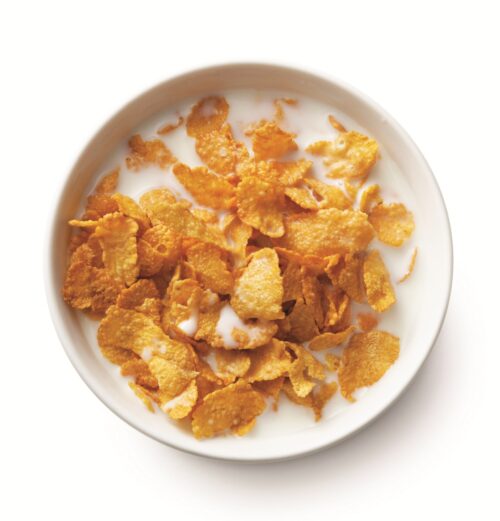
- Swap sugary cereal with homemade overnight oats with berries and plain yoghurt
- Swap a protein bar with a handful of nuts, edamame and a boiled egg
- Swap a ham sandwich on white bread for a leftover or rotisserie chicken and salad sandwich on wholegrain bread
- Swap instant noodles for leftover brown rice, stir-fried with mixed frozen veg and egg
- Swap bought burger patties with homemade patties of lean beef mince, chopped onion and fresh or dried herbs
- Swap bought flavoured chips with homemade vegie crisps baked in the air-fryer or oven (kale, thinly sliced potato, sweet potato, beetroot and parsnip all work well)
- Swap canned chilli beans for no-added-salt canned kidney beans flavoured with onion and spices at home.
- Swap chicken nuggets with bite-sized boneless chicken breast pieces (you can crumb these if you like, and cook them in the air-fryer)
- Swap microwave popcorn for home-popped popcorn
Still confused about what to eat?
The simplest way to approach the whole question of what to eat to be healthy and reduce preventable disease risk is to recall the basics.
- Where possible, choose or prepare foods and drinks that are mostly ‘whole’ and ‘less processed’. Take every opportunity to nourish yourself with core foods such as vegetables and fruit, high-fibre wholegrain foods, legumes, healthy fats such as nuts, seeds and olive oil, some dairy, fish and other seafood, eggs, poultry and moderate red meat, if you eat it.
- When it comes to UPFs, choose the healthier ones mentioned already, when necessary, and keep the ones that are energy dense and high in saturated fat, salt and/or free sugars as occasional.
Related content:
- 8 everyday foods you might not realise are ultra processed – and how to spot them
- Not all ultra-processed foods are bad for your health, whatever you might have heard
- Ultra-processed foods might not be the real villain in our diets – here’s what our research found
- Eating less ultraprocessed food supports healthier aging, new research shows
Article sources and references
- Barrett et al. 2023. Comparing product healthiness according to the Health Star Rating and the NOVA classification system and implications for food labelling systems: An analysis of 25 486 products in Australia. Nutr Bull.
- De Amicis et al. 2022. Ultra-processed foods and obesity and adiposity parameters among children and adolescents: a systematic review. Eur J Nutr. 61(5):2297-2311.
- Fang et al. 2024. Association of ultra-processed food consumption with all cause and cause specific mortality: population based cohort study. BMJ. 385.
- Food Standards Australia New Zealand. 2020. Diet quality and processed foods. Available at foodstandards.gov.au
- Hall et al. 2019. Ultra-processed diets cause excess calorie intake and weight gain: an inpatient randomized controlled trial of ad libitum food intake. Cell Metab. 30(1):67-77.e3.
- Johns Hopkins University Bloomberg School of Public Health. 2025. Most of the foods we eat are ultra-processed. Are they all unhealthy? Available at publichealth.jhu.edu.
- Lane et al. 2021. Ultraprocessed food and chronic noncommunicable diseases: a systematic review and meta-analysis of 43 observational studies. Obes Rev. 22(3):e13146.
- Lane et al. 2024. Ultra-processed food exposure and adverse health outcomes: umbrella review of epidemiological meta-analyses. BMJ. 384.
- Mackay et al. 2021. Which companies dominate the packaged food supply of New Zealand and how healthy are their products? PLoS One. 16(1):e0245225.
- Ministry of Health. 2020. Eating and Activity Guidelines for New Zealand Adults: Updated 2020. Available at health.govt.nz.
- Monteiro et al. 2018. The UN Decade of Nutrition, the NOVA food classification and the trouble with ultra-processing. Public Health Nutr. 21(1):5-17.
- Monteiro et al. 2019. Ultra-processed foods, diet quality, and health using the NOVA classification system. Rome: FAO.
- Monteiro et al. 2019. Ultra-processed foods: what they are and how to identify them. Public Health Nutr. 22(5):936-941.
- Monteiro et al. 2025. Ultra-processed foods and human health: the main thesis and the evidence. Lancet. 406(10520):2667-2684.
- National Heart, Lung, and Blood Institute. 2025. Spotlight on UPFs: NIH explores link between ultra-processed foods and heart disease. Available at nhlbi.nih.gov
- Pant et al. 2023. Association of ultra-processed foods with cardiovascular disease and hypertension in Australian women. Eur Heart J. 44(Suppl_2):ehad655.2388.
- Public Health Communications Centre. 2024. Debate on ultra-processed foods shouldn’t derail good dietary advice. Available at phcc.org.nz.
- Qu et al. 2023. Ultra-processed food consumption and cardiovascular events risk. Eur Heart J. 44(Suppl_2):ehad655.2389.
- University of Otago & Ministry of Health. 2011. A focus on nutrition: Key findings of the 2008/09 New Zealand Adult Nutrition Survey. Ministry of Health, Wellington.
www.healthyfood.com

 Achieve your goals
Unlock your ultimate healthy eating toolkit
Get instant access to everything you need to plan, shop and eat well in one place.