Cholesterol: How diet can help
Cholesterol is something we tend not to think too much about until we get a raised cholesterol test result. But being aware of and acting on the dietary and lifestyle factors that affect cholesterol can help reduce our risk of developing high cholesterol in the first place.
Here’s what we cover:
- What cholesterol is
- Cholesterol by numbers
- Foods to limit
- Foods to eat more of
- Cholesterol-lowering foods
- Lifestyle tweaks for managing cholesterol
- Dietitian-approved, cholesterol-lowering meal ideas
- Five easy swaps to lower your cholesterol
Cholesterol 101
Cholesterol is a type of fat that circulates in your bloodstream. Your body produces all of the cholesterol it needs, but some foods can contribute a small amount, too. Cholesterol plays a role in the production of vitamin D, which is important for healthy bones, as well as hormones such as oestrogen and testosterone. It also provides structure to your body’s cells and helps to produce bile acids which your body uses to digest certain nutrients.
Cholesterol is essential to keep your body fit and healthy, but having too much cholesterol is a cause for concern. High cholesterol is one of the main risk factors for heart disease, so keeping your cholesterol levels in check is key. There are two main types of cholesterol at play in this balancing game:
- Low-density lipoprotein or LDL cholesterol
This is the ‘unhealthy’ type of cholesterol that needs to be minimised. That’s because it builds up on artery walls as plaque which, over time, could restrict the flow of blood around your body and ultimately lead to a heart attack or stroke.
- High-density lipoprotein or HDL cholesterol
This is the ‘healthy’ type of cholesterol you want to boost. It carries LDL cholesterol back to your liver and, from there, is removed from your body.
Cholesterol by numbers
There aren’t any symptoms of high cholesterol, so regular blood tests are the only way to assess and manage your cholesterol level.
Your cholesterol test results are broken down into three main parts:
- Total cholesterol – if you’re otherwise healthy, this number is generally recommended to be less than 5.5mmol/l. if you have certain risk factors, this could need to be as low as 1.8mmol/l.
- LDL cholesterol – a healthy range is between 1.5 and 3.4mmol/l
- HDL cholesterol – a healthy range is between 1.0 and 2.0mmol/l prevention is key there are several risk factors for high cholesterol – some you can change and some you can’t. The non-modifiable risk factors include your age, sex and family history. The good news is, however, there are plenty of risk factors you can modify to prevent your cholesterol levels soaring.
These include:
- Unhealthy eating habits, especially diets that are high in saturated fat
- Drinking alcohol in excess
- Smoking
- Physical inactivity
- Being overweight or obese and, in particular, carrying excess weight around your waist.
Cut back on these foods…
Contrary to popular belief, you don’t have to pay much attention to the cholesterol level of the foods you eat.
Interestingly, dietary cholesterol has minimal impact on blood cholesterol levels. Instead, it’s far more important to cut back on saturated fat, as it has a far more potent effect on your LDL cholesterol level.
Foods high in saturated fat to minimise are:
- Fatty meats, especially meats with visible fat or chicken skin
- Processed meats such as bacon and salami
- Takeaway or deep-fried foods such as battered fish and chips
- Pastries, including sweet and savoury pies and tarts
- Sweets such as cakes, chocolate and ice cream
- Butter
- Coconut oil.
Eat more of these foods…
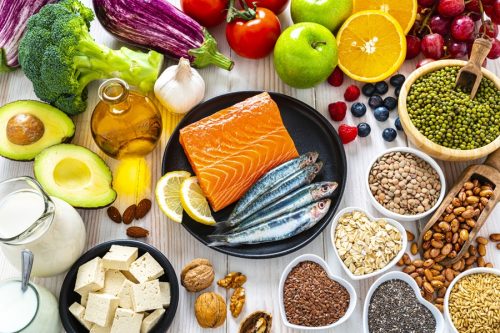
A healthy, balanced diet is the best place to start to take control of your cholesterol profile. A healthy eating pattern is based on:
- Lots of fresh fruit and vegetables
- Whole grains such as brown bread, brown rice and quinoa
- Lean proteins, including seafood, legumes, nuts and seeds
- Reduced-fat dairy or calcium-fortified soy alternatives.
Cholesterol-lowering foods
Once you’ve got the basics down pat, there are three cholesterol-lowering nutrition tools you can consider:
1. Plant sterols
Plant sterols are natural compounds found in plant foods. They work to improve your cholesterol level by blocking the absorption of LDL cholesterol. In fact, studies have shown that consuming just 2g of plant sterols each day can lower your cholesterol levels by up to 10 per cent. The catch is, consuming this quantity of plant sterols is quite hard – so you need to look for products that are fortified such as milk, margarine and breakfast cereals.
2. Soluble fibre
Fibre isn’t just good for your gut – it’s also a key component of a heart healthy diet. Soluble fibre, in particular, supports heart health, because it binds to cholesterol in your body which, again, reduces its absorption. Beta-glucan is a special type of soluble fibre that is particularly effective in lowering cholesterol. one of the best sources of beta-glucan is the humble rolled oat – and research has shown that regularly eating oats can reduce cholesterol levels by up to 7 per cent.
3. Healthy fats
Dietary fats can be divided into good for-you unsaturated fats and not-so good-for-you saturated fat. While it’s important to reduce your intake of saturated fat to lower your ‘bad’ LDL cholesterol level, it’s just as important to increase your intake of unsaturated fats to boost your ‘good’ HDL cholesterol level. You’ll find healthy fats in foods such as:
- Avocado
- Nuts
- Seeds
- Healthy oils such as olive or canola
- Margarine/spread.
Quick tips
Eat oily fish such as salmon, sardines and mackerel at least two to three times per week limit your intake of red meat to two to three times per week.
Lifestyle tweaks for managing cholesterol
What you eat plays a huge role in managing your cholesterol levels – but that’s not all. Depending on your individual circumstances, your doctor might put you on cholesterol-lowering medications known as ‘statins’. This is very common in people who have a family history of high cholesterol because lifestyle changes alone might not be enough to improve cholesterol profiles in these people.
How much you exercise is also important, because regular physical activity helps to boost your levels of good’ HDL cholesterol. Adults are recommended to do at least 2½ hours of moderate exercise or at least 1¼ hours of vigorous physical activity per week. That’s the kind of exercise where you’re breaking a sweat, huffing and puffing.
Another lifestyle consideration in managing your cholesterol levels is smoking – if you’re a smoker, it’s wise to quit. When you smoke, your arteries are more susceptible to damage from bad LDL cholesterol. Smoking also reduces your level of good HDL cholesterol, so it really is a double whammy.
Last, but not least, cutting back on booze is a good idea. Women are recommended to have no more than 10 standard drinks per week, while men should have no more than 15. And there is no ‘safe’ amount of alcohol to consume for good health.
Dietitian-approved, cholesterol-lowering meal ideas
Breakfast
- Homemade muesli made of rolled oats, macadamias and chia seeds, served with plain low-fat yoghurt and fresh fruit
- Wholegrain toast topped with avocado, sliced tomato and feta cheese
- Wholegrain toast topped with a small tin of reduced-salt baked beans.
Lunch
- Wholegrain crispbreads topped with hummus and tuna, served with crudités
- Toasted sandwich made with wholegrain bread, chicken and cheese, served with a side salad
- Salad made with hardboiled eggs, chickpeas and lettuce.
Dinner
- Pan-fried fillet of salmon served with roasted vegetables
- Fried rice made with brown rice, prawns and vegetables
- Tofu stir-fry made with soba noodles and vegetables.
- Frittata made with broccolini, peas and goat’s cheese
- Baked chicken breast and a lentil salad
- Burgers, made of lean beef mince, and salad on a wholegrain roll.
Snacks
- Small handful of raw, unsalted nuts
- One piece of fresh fruit
- Veggie sticks and hummus
- Small tub of plain low-fat yoghurt topped with berries
- Regular-sized skim latte
- Smoothie made with plant sterol-enriched milk and frozen fruit.
Five easy swaps to lower your cholesterol
Simple swaps can make help push your cholesterol down.
- Eat oily fish regularly
Replace chicken or meat in some of your meals with oily fish (salmon, sardines, tuna) to boost your levels of (good) HDL blood cholesterol and also reduce the chance of blood clots forming.
Aim for two to three oily fish meals a week. A fish oil capsule taken every day will also do the trick if you’re not so keen on fish.
- Swap low-fibre cereal for oats
Oats and oat bran contain soluble fibre which has been shown to lower LDL cholesterol. Enjoy a bowl of porridge or muesli for breakfast, with a sprinkling of psyllium for even more soluble fibre. Then choose an oaty muffin as a snack, or include chickpeas, lentils or barley (also good sources of soluble fibre) at lunch or dinner each day.
- Snack on nuts, not chips and salty snacks
Nuts contain healthier fats that have been shown to help lower cholesterol and not influence weight. Also, they’re loaded with satisfying protein and fibre plus antioxidant vitamin E. Grab a handful (about 30g) of unsalted, raw or roasted nuts as a go-to snack. That’s about 20 almonds or 15 cashews.
- Add thick yoghurt in place of sour cream
Substitute reduced-fat Greek yoghurt for sour cream to garnish soups and curries and you’ll go from 14 to one per cent saturated fat. Add a spoonful in place of sour cream.
- Replace butter with sterol spread
Using a sterol-enriched spread can help reduce LDL blood cholesterol. Avocado is also a heart-healthy choice.
You need one or two rounded tablespoons of spread, such as Flora Pro-activ, each day to lower cholesterol by 10 per cent, according to the research. Reach that goal by spreading it on a sandwich or melting it over veggies or in mashed potato.
Will eating eggs increase my cholesterol?
Eggs are one of the few foods high in cholesterol but with little saturated fat. Around the world people were warned to limit their consumption of eggs, but with our improved understanding of fats and cholesterol we now find there is no evidence of a link between dietary cholesterol and heart disease risk, whereas the link between saturated fat and heart disease risk is clear. Large studies in the US have found the risk of heart disease is similar for people eating less than one egg and those eating six eggs each week.
The bottom line
What you eat plays a role in managing your cholesterol levels – but that’s not all. Lifestyle factors such as smoking, exercise and alcohol consumption also potentially affect cholesterol levels. Additionally, some people with a family history of high cholesterol may be more prone to elevated levels. Depending on your individual circumstances, your doctor might put you on cholesterol-lowering medications which a healthy diet should not replace but can complement.
Related content
Article sources and references
- Better Health Channel. 2014. Cholesterol. Accessed March 2022.https://www.betterhealth.vic.gov.au
- Better Health Channel. 2022. Cholesterol – healthy eating tips. Accessed March 2022.https://www.betterhealth.vic.gov.au
- Health Direct. 2021. How to lower your cholesterol. Accessed March 2022.https://www.healthdirect.gov.au
- Heart Foundation. 2022. Blood cholesterol. Accessed March 2022.https://www.heartfoundation.org.au
- Heart Foundation. High cholesterol www.heartfoundation.org.nz/knowthe- facts/conditions/highcholesterol Accessed June 2015https://www.heartfoundation.org.nz/wellbeing/managing-risk/managing-high-cholesterol/
- Katz DL & Meller S. 2014. Can we say what diet is best for health? Annual Review of Public Health 83-103https://www.annualreviews.org/doi/10.1146/annurev-publhealth-032013-182351
- Micha R & Mozaffarian D. 2010. Saturated fat and cardiometabolic risk factors, coronary heart disease, stroke, and diabetes: a fresh look at the evidence. Lipids 45:893-905https://www.ncbi.nlm.nih.gov/pubmed/20354806
- Mozaffarian D et al. 2010. Effects on coronary heart disease of increasing polyunsaturated fat in place of saturated fat: a systematic review and metaanalysis of randomized controlled trials. PLoS medicine 7, e1000252https://www.ncbi.nlm.nih.gov/pubmed/20351774
- New Zealand Guidelines Group. New Zealand Primary Care Handbook 2012. 3rd ed. Wellington: New Zealand Guidelines Grouphttps://www.health.govt.nz/publication/new-zealand-primary-care-handbook-2012
- Nutrition Evidence Library. 2014. A series of systematic reviews on the relationship between dietary patterns and health outcomes. US Department of Agriculture www.nel.gov/ publicationshttps://www.fns.usda.gov/cnpp/center-nutrition-policy-and-promotion
- Heart Foundation. 2022. Let’s chew the fat about cholesterol: your top five questions answered. Accessed March 2022.https://www.heartfoundation.org.au
www.healthyfood.com
 Achieve your goals
Unlock your ultimate healthy eating toolkit
Get instant access to everything you need to plan, shop and eat well in one place.