HFG guide to canned seafood
Senior nutritionist Rose Carr ventures beyond canned tuna to find a huge range of seafood choices.
What is available?
We had already investigated canned tuna, and we wanted to see what other canned seafood was available.
There is a lot to choose from: salmon, sardines, mackerel, smoked oysters, crab meat, anchovies, smoked mussels, smoked fish fillets and shrimps – and that’s before looking at any flavoured salmon variants.
There is a lot to like about canned seafood, including its versatility. Use canned seafood in a quiche, omelette, frittata, sandwich, on toast, or in pasta, rice or potato salads.
Calcium
Some canned seafood is a good source of calcium because they are eaten with their bones. Unfortunately, none of the products we found listed the amount of calcium on their nutrition information panel so we have used food composition tables to compare different fish. While the amount of calcium in different brands may vary, sardines are the calcium star. A small can of drained sardines (around 90g fish) provides around 500mg calcium: that’s almost as much as a glass of calcium-fortified milk and around half of most adults’ daily calcium requirements. The same amount of pink, sockeye and chum salmon, or mackerel, provides around 220mg calcium. Canned shrimp and red salmon also contain a smaller amount of calcium.
Long-chain omega-3 fats
Salmon, sardines, mussels, herring and some mackerel are all good sources of the essential long-chain omega-3 fats. We prefer products that state the omega-3 content and show the amount of DHA and EPA, which are the important long-chain omega-3s from fish. When comparing like products, choose canned seafood with more DHA and EPA stated on-pack.
Protein
Canned seafood is a good source of relatively affordable, portable protein. It’s much easier to keep a can of sardines in your office lunch kit than meat or cheese that needs refrigerating. Salmon, sardines and mackerel tend to be the cheaper varieties.
Iodine
Seafood, including these canned products, is a good source of iodine. Because many of us don’t get enough of this important mineral in our diets, all bread, except for organic bread, is now fortified with iodine.
Look out for sodium and oil
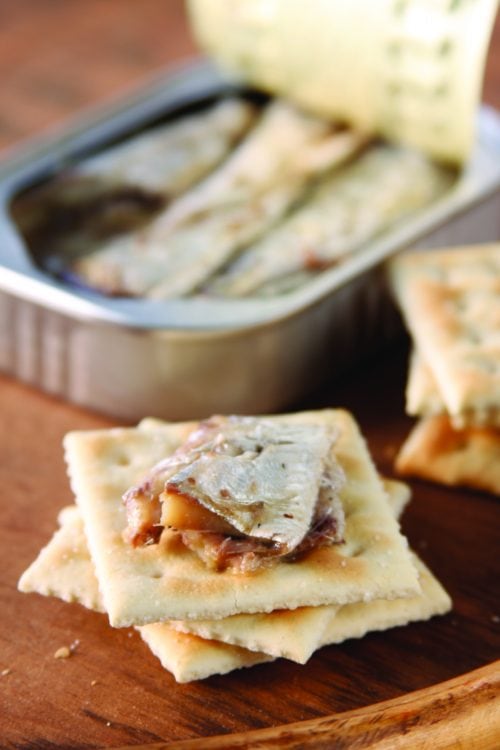
If it’s a choice between seafood canned in brine or spring water, we recommend spring water as the sodium content will be higher when it’s in brine. When comparing like products, we prefer canned seafood varieties with 400mg or less sodium per 100g. Anchovies are super-high in sodium but we only need a little to add flavour. If you are partial to anchovies on crackers, we recommend them as an irregular treat.
In general, we also prefer products in spring water to those canned in oil. We prefer the fat in the fish rather than added oil. This also keeps the amount of fat and energy down; even when drained those canned in oil will be higher in fat. Trident Smoked Mussels, at nearly one-third fat, highlight this point: smoked mussel flesh is usually around 11 per cent fat.
www.healthyfood.com

 Achieve your goals
Unlock your ultimate healthy eating toolkit
Get instant access to everything you need to plan, shop and eat well in one place.