HFG guide to soft cheeses
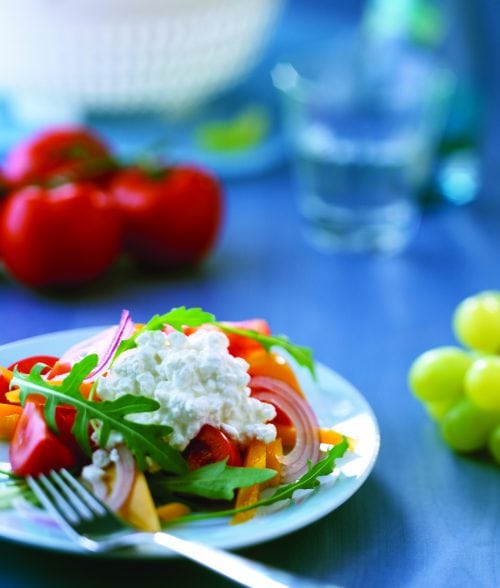
We may be familiar with cream cheese and cottage cheese, but these days a much wider choice of soft cheeses is available. Rose Carr tells us which soft cheese varieties are healthier.
Cream cheese, crème fraîche and mascarpone are predominantly made of cream, and like cream they are very high in fat and saturated fat. These are not health foods and where there are alternatives, it’s best to use them.
Cream cheese has a smooth texture which is sweet, soft and spreadable. If you want to use cream cheese, try a reduced-fat or light version.
We’ve included crème fraîche as it can be used in similar ways to a soft cheese, even though it is really a cultured sour cream. It can be whipped and it doesn’t separate when heated, so it is said to be a good alternative to cream, sour cream or thickened cream. Even the lite version, however, has 20 per cent fat so in some recipes you may find a thick yoghurt is a good substitute.
Mascarpone is an Italian-style cream cheese: thick, smooth and very creamy. It’s also up to 46 per cent fat, so we suggest you try substituting with either reduced-fat crème fraîche or ricotta, which is lower-fat again.
Cottage cheese is made from curds, so it has a lumpy yet creamy texture. Ricotta is made from scalded whey and it’s sweet and creamy with a slightly grainy texture. Both cottage cheese and ricotta are useful substitutes for their higher-fat cousins in a range of sweet and savoury dishes (for example, cheesecake mousse, sauces and soups). They will curdle when heated, so add at the last minute. Also try using these two soft cheeses as a substitute in recipes calling for sour cream, cream or butter to add the required creaminess for a lot less fat. Our taste testers were surprised at how deliciously creamy the lower-fat cheeses were.
Calcium
Soft cheeses do contain calcium, but generally not as much as trim milk or low-fat yoghurt which we generally consume in greater amounts. One tablespoon of trim milk has around the same amount of calcium as three tablespoons of cottage cheese. Ricotta has more calcium, but milk still wins: one-third of a cup of trim milk has more calcium than three tablespoons of ricotta. The trim milk also has less saturated fat than any of the cheeses.
Sodium
The amount of sodium varies between cheeses, although not as widely between brands of similar style cheeses. It’s always a good idea to check the nutrition panel and compare like products.
How much fat*?
- Reduced-fat cottage cheese <1%
- Cottage cheese 4-5%
- Reduced-fat ricotta 5-7%
- Ricotta 10-16%
- Reduced-fat cream cheese 16-18%
- Reduced-fat crème fraîche 20-22%
- Cream cheese, crème fraîche, mascarpone 35-46%
How to choose
- Decide which types of soft cheese will deliver the flavour and texture needed for the purpose you have in mind. It’s worth experimenting with your recipes.
- Choose the product with the lowest saturated fat.
- Choose the product with the lowest sodium.
www.healthyfood.com

 Achieve your goals
Unlock your ultimate healthy eating toolkit
Get instant access to everything you need to plan, shop and eat well in one place.