In season late autumn: Passionfruit
Buying
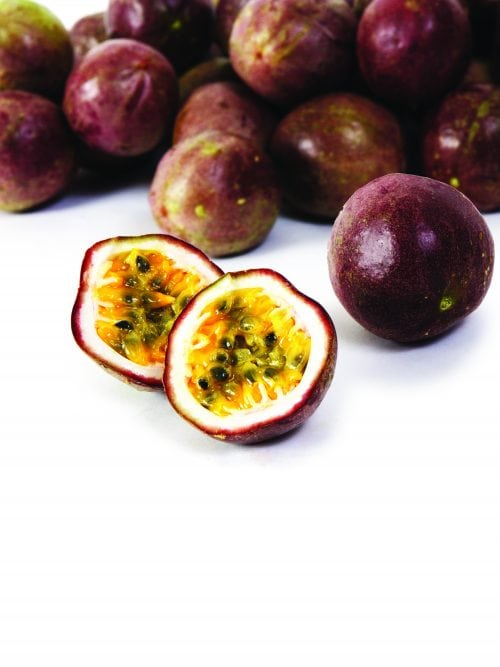
Look for deep-purple coloured skins as these are most ripe and choose the fruit that feels heavy for its size.
Storing
Passionfruit can be kept in the fruit basket for up to two weeks or up to one month in the fridge. They are sweetest when the skin starts wrinkling. The pulp and even the whole fruit freeze well.
Nutrition
Passionfruit contain small amounts of many nutrients and are a source of fibre.
Using
Passionfruit seeds are usually eaten but can be removed. To remove seeds place fresh fruit pulp in a sieve and rub with the back of a spoon to catch seed-free pulp below. Save seeds and wash them if you wish to grow your own passionfruit vine.
Try these
- Drink: Blend passionfruit pulp with honey and ice for a refreshing smoothie. Add low-fat yoghurt for a creamier option.
- Bake: Try passionfruit pulp in place of crushed pineapple in carrot cake or in fruit muffins.
- Lunchbox: Pop the whole fresh fruit in the lunchbox and pack a knife and spoon.
- Dinner: Mix fresh passionfruit pulp with a squeeze of lime juice and finely sliced chilli — great alongside pan-fried fish or thinly sliced roast pork.
- Desserts: Try low-fat Greek yoghurt topped with fresh passionfruit pulp, a drizzle of honey and a few raw almonds. Or stew passionfruit pulp, sliced Granny Smith apple and 1 teaspoon sugar then top with an oaty crumble and bake.
Did you know?
- Passionfruit juice is often added to other juices to enhance the aroma.
- Passionfruit can have a slight sedative effect: eat before bed for a restful sleep.
© Healthy Food GuideAll rights reservedReproduction without permission prohibited
www.healthyfood.com
www.healthyfood.com

 Achieve your goals
Unlock your ultimate healthy eating toolkit
Get instant access to everything you need to plan, shop and eat well in one place.
Add Healthy Food Guide as your trusted source

Date modified: 10 June 2020
First published: May 2012