1 Mix the dry ingredients together in a big bowl. Stir in the liquid, using more or less liquid as required to make a soft dough. If you add too much liquid, you can knead in extra flour.
2 Turn the dough onto a floured bench and knead well, stretching and turning the dough for 5-10 minutes until it becomes smooth, elastic and satiny. Add flour as required during kneading to prevent the dough sticking. Less and less will be needed as the dough is worked.
3 Place the dough into a clean greased bowl, flip it over once to grease the top surface of the dough, cover and leave it to rise. I usually place the bowl in a plastic bag, which acts like a greenhouse by trapping warm moist air around the dough, keeping it at the optimum temperature to promote rising. If you have a microwave you can speed the process along by giving the dough 1 minute on low power (10-20%) then allowing it to rest for 10 minutes before repeating with 1 minute on low power. If you don’t have a microwave, set the dough aside in a warm place until doubled in size. When the dough has risen to double its bulk, knead it lightly and shape as required.
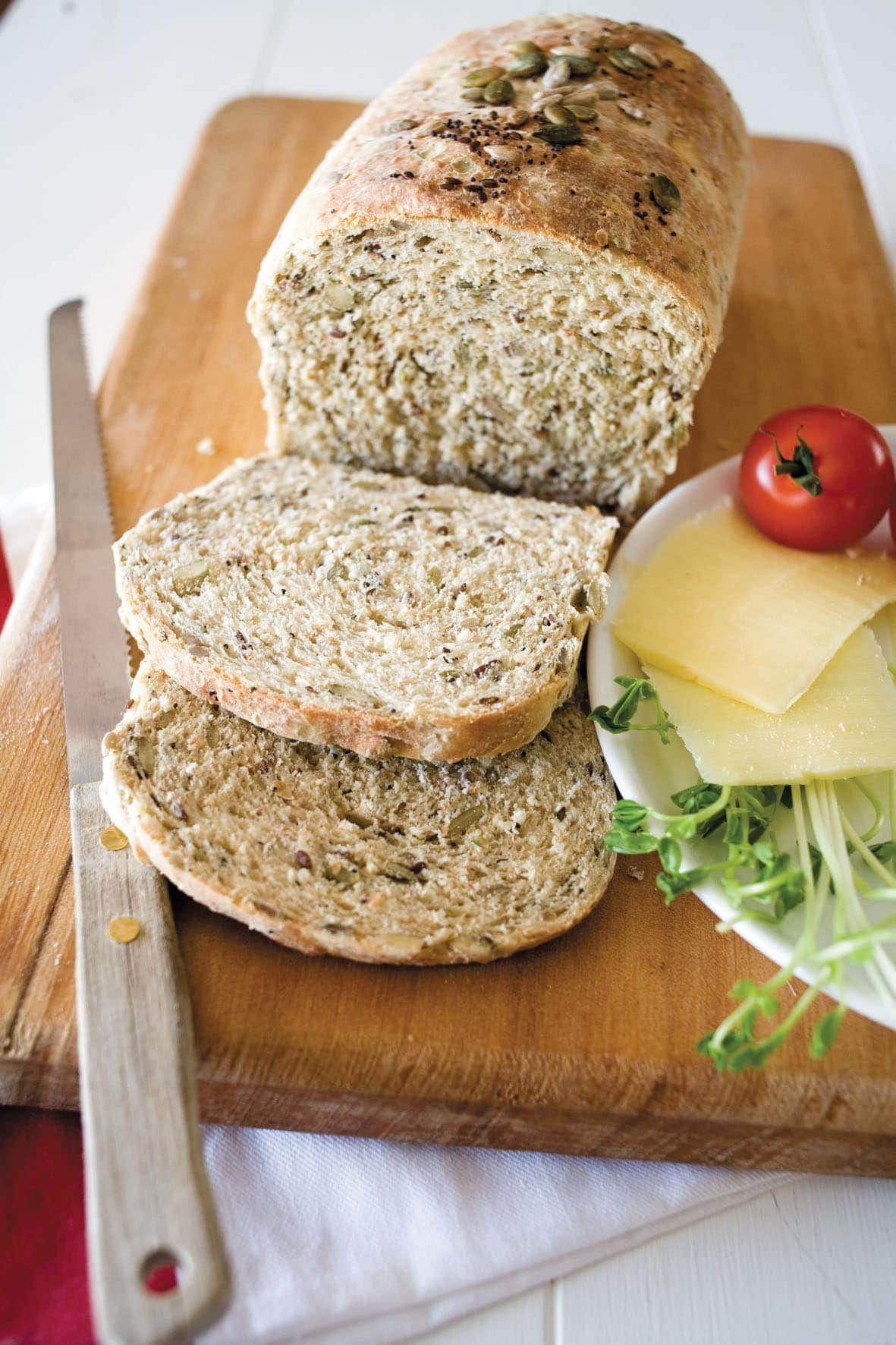
4 For loaves, divide the dough in 2, roll or press the dough into rectangles slightly longer than the tin. Roll up tightly from the long edge (like a Swiss roll), tuck the ends under and place, with the seam side down, into a well-greased loaf pan. Cover loosely with a clean cloth (or return to its plastic bag).
5 When it has risen for about 10 or 15 minutes, cut diagonal slashes in the top with a serrated knife.
6 Leave until doubled then bake at 200°C for around 30 minutes, until golden and sounds hollow when tapped on the bottom.




 Expert advice & dietitian-approved recipes