Bought vs homemade: Cooked chicken

We all love the smell of a chicken roasting in the oven, but a whole cooked chicken picked up from the supermarket is a quick and easy meal starter for busy evenings. Is it just as good?
Bought
Supermarket hot roast chicken
Ingredients: Chicken 97%, seasoning (3%) (salt, rice flour, mineral salts (451, 452, 450), herbs and spices (includes chilli), maltodextrin (from corn), vegetable powders (onion, garlic), acidity regulators (330, 262), wheat fibre, thickener (415), natural colour (160c), natural flavours (roast meat, chicken, lemon), smoke flavour, yeast extract, herb extracts).
vs
Homemade
Plain chicken roasted in oven bag
Ingredients: Chicken
Nutrition information per serve
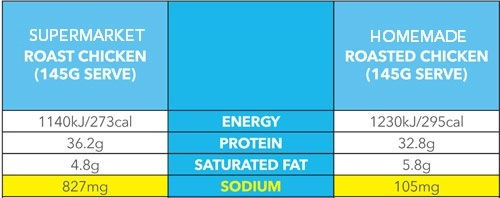
Overall, store-bought hot chickens compared pretty well with home-roasted chicken. Chickens do vary slightly in terms of protein and fat content, and therefore total energy. The main thing to know is that roasted chicken is a good source of protein. It does contain saturated fat, but not too much for your evening meal. If you’re buying a roasted chicken beware of the sodium! The key difference between home-roasted and store-bought hot chicken is the salt in it.
Some hot chickens are better than others
We compared a serve of home-roasted chicken with the highest sodium product we found, to highlight what a difference the seasoning can make and how important it is to check the sodium. Overall, the products we saw ranged from 450-827mg sodium per serve. We’d recommend finding one at the lower end of the range.
Depending on the hot chicken you choose and what you eat with it, there is potential to end up with a very high-sodium meal. For example, a grainy bread roll with some lettuce, reduced-fat cheese, tomato and mayonnaise could add another 550-650mg of sodium, and you could be eating a meal with 1477mg sodium. That’s 64 per cent of the recommended upper daily limit.
The home-roasted chicken by itself is a much better option (assuming you have the time), but you’re not likely to eat that by itself either. By the time you’ve added gravy and roast veges, possibly with some table salt, it may or may not be a low-sodium meal.
The moral of the story is store-bought hot chicken is part of a meal. Choose a lower-sodium option and think about what you have with it. A big salad and some quick-cook rice will keep the meal low in sodium, while still being quick and easy.
www.healthyfood.com

 Achieve your goals
Unlock your ultimate healthy eating toolkit
Get instant access to everything you need to plan, shop and eat well in one place.