How to manage common food allergies safely
For those living with food allergies, eating safely involves more than simply avoiding certain foods. It means understanding how allergies work, recognising symptoms and learning practical ways to prevent accidental exposure.
Although a food allergy may feel overwhelming at first, many people manage them successfully with the right knowledge and preparation. Learning how to identify trigger foods, read labels and plan meals can help make everyday eating safer and less stressful. This guide explains the most common food allergies, how to recognise symptoms and practical ways to manage them safely.
On this page
- What is a food allergy?
- Common food allergies
- Recognising allergy symptoms
- What is anaphylaxis?
- Diagnosing food allergies
- How to avoid allergens safely
- Reading food labels
- Hidden sources of allergens
- Managing allergies when dining out
- Food allergies in children
- Building a balanced diet with food allergies
- Quick tips for living with food allergies
- Emergency plans and treatment
- FAQs
What is a food allergy?
A food allergy is an immune reaction to a specific food. When someone with a food allergy eats that food, the immune system mistakenly over reacts to proteins in that food as though they’re a threat. It releases immunoglobulin E (IgE) antibodies in response to the trigger, which we call an allergen.
This triggers the release of chemicals, such as histamine, which cause the symptoms of an allergic reaction. While allergic reactions are often mild, some can be very serious resulting in anaphylaxis which can be life threatening.
Reactions often occur within seconds or minutes of eating the food, although sometimes they can appear later. Even very small amounts of an allergen can trigger symptoms in sensitive individuals, so people with food allergies usually need to avoid the trigger food completely.
Food allergy vs food intolerance
Food allergies and food inolerances are often confused, but they are different conditions. A food allergy is an immune system reaction to a type of food protein. A food intolerance, however, does not involve the immune system. Instead, it happens when the body has difficulty digesting a food component. For example, lactose intolerance occurs when the body does not produce enough lactase to digest lactose, the natural sugar in milk. Symptoms of intolerance can include bloating, abdominal discomfort and diarrhoea.
While intolerances can be uncomfortable, they are usually not life-threatening. Food allergies require stricter management because severe reactions are possible.
Common food allergies
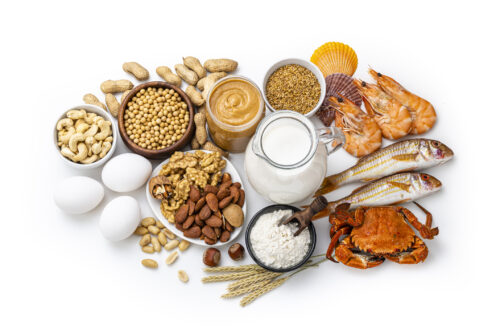
Although almost any food can cause an allergic reaction, a small group account for most food allergies. Children often grow out of milk, soy, egg or wheat allergies, whereas allergies that develop in adulthood or have persisted from childhood are likely to need lifelong management:
Milk allergy
Cow’s milk allergy is one of the most common food allergies in young children. It occurs when the immune system reacts to proteins in milk such as casein or whey. A milk allergy is different from lactose intolerance, which relates to difficulty digesting milk sugar, whereas milk allergy involves the immune system.
Children with a milk allergy usually need to avoid foods containing milk proteins. Many children eventually outgrow the allergy, although this varies between individuals.
Egg allergy
An egg allergy, particularly to proteins found in egg whites, is also common in childhood. Since eggs appear in many foods including baked goods, sauces and processed foods, ingredient labels need to be checked carefully. Many children outgrow an egg allergy over time.
Peanut allergy
A peanut allergy is one of the most common causes of severe allergic reactions. Unlike some childhood allergies, a peanut allergy is less likely to be outgrown. Even very small amounts of peanut can trigger symptoms in sensitive individuals. Peanuts may appear in foods such as sauces, baked goods, snack foods and confectionery.
Tree nut allergy
Tree nuts include almonds, walnuts, cashews, pistachios, hazelnuts and macadamias. People allergic to one type of nut may also react to others. They can also appear in many foods including desserts, snack bars and sauces such as pesto.
Wheat allergy
A wheat allergy occurs when the immune system reacts to proteins found in wheat. This condition is different from coeliac disease, which involves an immune reaction to gluten. People with a wheat allergy may need to avoid foods such as bread, pasta and baked products containing wheat. Other grains such as rice, corn, oats and quinoa can be used as alternatives.
Soy allergy
With a soy allergy, the reaction is caused by sensitivity to proteins within soybeans. Soy appears in many processed foods including sauces, tofu and soy milk. Soy ingredients are widely used in food manufacturing, so reading labels carefully is a must.
Fish and shellfish allergy
Fish and shellfish allergies are also common. Like other allergies, if they develop in adulthood fish and/or shellfish allergies are likely to persist throughout life. Some people with an allergy to finned fish, such as to salmon, tuna, cod, mackerel, snapper etc, may still be able to eat shellfish. And some people are allergic to only one type of shellfish, while others might need to avoid all shellfish. It’s important to follow advice from your doctor.
Aboout 2 per cent of the population is allergic to shellfish, while around 1 per cent is allergic to fish.
Shellfish include crustaceans (prawns, shrimps, crabs, lobster and crayfish) and molluscs (mussels, oysters, clams, scallops, squid, octopus, paua (abalone) and sea snails). Most people with a shellfish allergy are allergic to crustaceans.
Recognising allergy symptoms
Food allergy symptoms can vary widely and may affect the skin, digestive system, breathing or circulation.
Common symptoms include:
- hives or itchy skin
- swelling of the lips, face or eyes
- tingling in the mouth
- stomach pain
- nausea or vomiting
- diarrhoea
- coughing or wheezing
- difficulty breathing
Symptoms usually appear soon after eating the trigger food. Even if previous reactions were mild, severe reactions can still occur in the future.
What is anaphylaxis?
Anaphylaxis is a severe and potentially life-threatening allergic reaction. It can develop quickly and requires urgent medical treatment.
Symptoms may include:
- difficulty breathing
- swelling of the tongue or throat
- hoarse voice or difficulty speaking
- dizziness or collapse
- pale or lethargic appearance in children
Immediate treatment of anaphylaxis with an adrenaline injection using an adrenaline autoinjector is require. Anyone diagnosed with a severe allergy may be advised to always carry an autoinjector.
Diagnosing food allergies
A food allergy should be assessed by an appropriately qualified healthcare professional. They will usually begin by asking about your symptoms, what foods were eaten and how soon the reaction happened. Assessment is especially important if symptoms occur shortly after eating a specific food, if reactions happen more than once after eating the same food, or if symptoms include breathing difficulties or swelling.
To work out whether a true allergy is present, a doctor may use a combination of medical history, skin prick tests, blood tests that measure allergy antibodies and, in some cases, supervised food challenges, which involve eating small amounts of the suspected allergen under medical supervision.
Why self-diagnosis can be risky
Accurate diagnosis ensures you get the right treatment for your condition. Removing foods from the diet without medical advice can sometimes cause unnecessary nutrient deficits. This may make it harder to maintain a balanced diet so having a confirmed diagnosis helps to ensure only the necessary foods are avoided.
How to avoid allergens safely
Avoiding the trigger food allergen is the main way to prevent allergic reactions. For many people, this involves developing daily habits that reduce the risk of accidental exposure.
At home
Preparing meals at home gives more control over ingredients. Important safety precautions for food prep when someone in the house has a food allergy include:
- Washing and drying your hands carefully.
- Using separate surfaces and utensils for the allergic person’s meal.
- Using paper towels to clean spills or mess and discarding; allergens can be transferred on dishcloths or tea towels.
- Thoroughly cleaning utensils, chopping boards, containers and grills to avoid cross-contamination between foods.
- Reading the label of every ingredient of a recipe; allergens can turn up in unexpected places.
- Thinking before adding nut and seed oils, salad dressings and sauces.
- Avoiding use of deep-fryers, fats or oils that have been used to cook other foods.
- Keeping the food-allergic person’s meal covered and separate to other meals if allergenic food is used in other dishes.
- Watching that the peanut butter or mayonnaise knife hasn’t been used in the margarine or butter tub; allergens are easily transferred on cutlery.
- Discussing the meal, its ingredients and preparation with the food-allergic person beforehand; they can be a mine of information and can suggest suitable foods.
- Not being offended if a guest wants to bring their own food; allowing them to heat their covered dish separately from other food.
When shopping
Always check ingredient lists when buying packaged foods. Manufacturers sometimes change recipes, so a product that was previously safe may contain new ingredients. Learning the different names used for allergens can also help.
At school, childcare or work
Clear communication is important when managing food allergies in shared environments. This may involve informing staff, colleagues or teachers about the allergy and providing clear instructions about which foods must be avoided.
Reading food labels
Food labels are one of the most important tools for managing food allergies. In Australia and New Zealan, major allergens must be declared on packaged foods, so it is important to check the ingredients list and any allergen statement every time you buy a product, even if you have bought it before.
Look for clear declarations such as:
- contains milk
- contains peanuts
- contains wheat
You may also see precautionary statements such as “may contain traces of nuts”. These statements point to a possible risk of cross-contamination during manufacturing, so they are worth paying attention to, especially for people with more severe allergies.
Learn more about how to read packaging labels with our Guide to reading labels.
Hidden sources of allergens
Allergens are not always obvious and some foods can contain allergenic ingredients even when you might not expect them to. For example, milk, egg, soy, sesame, wheat, peanuts or tree nuts may appear in crumbs, batters, spice mixes, marinades, sauces and fillings. Even foods that seem simple, such as chips, salads or grilled meats, may contain hidden allergens through dressings, seasoning or shared preparation areas.
Common hidden sources include:
- Sauces and dressings: salad dressings, marinades, satay sauces, curry pastes and mayonnaise
- Baked goods: muffins, biscuits, pastries, banana bread and café slices
- Processed meats: sausages, deli meats, meatballs and chicken schnitzels
- Confectionery: chocolate bars, filled chocolates, nougat and muesli bars
- Takeaway foods: burgers, fried chicken, sushi, curries and noodle dishes
- Convenience foods: frozen meals, packet soups, instant noodles and savoury snacks
- Spreads and dips: hummus, pesto and flavoured nut butters
- Breakfast foods: cereals, granola and flavoured oat sachets
Checking ingredient lists and allergen statements every time you buy a product and asking how food is prepared when eating out, can help reduce risk.
For more help with your allergy-free grocery shop, see our Smart shopping guide.
Managing allergies when dining out
Eating out can be more challenging when you have a food allergy, but planning ahead can help reduce the risk. Checking the menu in advance, booking ahead and choosing a quieter time can make it easier to ask questions.
Helpful steps include:
- explaining clearly that it is a food allergy, not just a preference
- asking whether the dish can be prepared safely
- checking whether shared oil, grills or utensils are used
- choosing simpler dishes over foods with sauces, marinades, dressings or crumb coatings
- avoiding buffets, where shared serving utensils can increase the risk of cross-contamination
Even if a dish seems safe, it is worth checking every time, as recipes and preparation methods can vary. If staff are unsure, or you do not feel confident the food can be prepared safely, it is best to choose something else or not eat there.
Food allergies in children
Food allergies are particularly common in infants and young children. Milk, egg and peanut allergies are among the most frequently diagnosed in early childhood.
Infants with severe eczema, or a sibling or parent with allergies, have a high risk of developing a food allergy. Infants with severe eczema and/or egg allergy are at increased risk of developing an allergy to peanuts. Feeding these infants peanut foods before the age of 12 months , ideally around 6 months, significantly reduces the risk of developing peanut allergy.
At around six months old, but not before four months, start introducing infants to solid, iron-rich foods. Give infants common allergen foods including smooth peanut butter/ paste, cooked egg, dairy and wheat products before the age of 12 months, unless they’ve already been diagnosed with an allergy to that food. This is recommended for all infants, including those with severe eczema. Remember, whole nuts and seeds are a choking risk for children under five, so use smooth nut and seed butters to introduce nuts and seeds.
Excluding foods during pregnancy or breastfeeding is not recommended, unless an allergy has been clinically diagnosed. When introducing foods, give them regularly (twice a week) as part of a varied diet, to maintain tolerance. Trying a food and then not giving it again may result in food allergy development.
If you suspect a food allergy, stop giving that food and seek medical advice.
Managing allergies in children often requires cooperation between parents, caregivers and schools.
Important steps include:
- providing schools, childcare centres and other carers with an up-to-date allergy action plan
- teaching children which foods they must avoid, in an age-appropriate way
Many children eventually outgrow some allergies, particularly milk and egg allergies.
Building a balanced diet with food allergies
Removing foods from the diet can raise concerns about nutrition. With careful planning, most people with food allergies can still meet their nutritional needs. The key is replacing nutrients from avoided foods with other foods.
For example:
- calcium can come from tofu, leafy greens and fortified plant milk alternatives
- protein can come from legumes, eggs, fish or meat
- fibre can come from whole grains, fruit and vegetables
When dairy is avoided, it becomes important to ensure adequate calcium intake. There are several calcium-rich foods that are dairy free that can help support bone health. If dairy alternatives are needed, see our guide to staying healthy when dairy-free. <insert link when live>
Nutrients to watch
When certain foods are removed from the diet, some nutrients may need extra attention.
For example:
- calcium if dairy foods are avoided – try calcium-rich foods such as fortified plant milks, calcium-set tofu and leafy green vegetables
- protein if eggs or nuts are avoided – include other protein foods such as legumes, tofu, fish, meat or dairy if tolerated
- fibre if wheat is avoided – choose other high-fibre foods such as fruit, vegetables, legumes, oats and brown rice
If dairy is avoided because of digestive symptoms rather than allergy, it is still important to find other ways to meet your calcium needs. This may mean choosing calcium-rich foods more often or using suitable fortified alternatives.
A varied diet that includes vegetables, legumes, whole grains and protein foods can help support good nutrition.
Quick tips for living with food allergies
Managing food allergies can take some adjustment, but small daily habits can make it easier.
Helpful tips include:
- Always read ingredient labels, even for foods you buy regularly
- Keep safe snacks available when travelling or attending events
- Tell friends, family and restaurant staff about your allergy
- Wash hands and cooking utensils carefully to avoid cross-contamination
- Carry prescribed medication if you are at risk of severe reactions
- Learn the different names used for allergenic ingredients
Over time, many people become familiar with safe foods, trusted brands and strategies that help them manage allergies confidently.
Emergency plans and treatment
Anyone diagnosed with a severe food allergy should have a clear emergency plan so they and the people around them know what to do if a reaction happens. This is especially important for children, and for anyone who spends time at school, childcare, work or social events where others may prepare their food.
An emergency plan may include:
- carrying an adrenaline autoinjector at all times, if one has been prescribed
- knowing the signs of a mild or severe allergic reaction
- making sure family, friends, teachers, carers or colleagues know about the allergy
- showing others where emergency medication is kept and how to use it
- seeking urgent medical help if symptoms of anaphylaxis occur
After using an adrenalin autoinjector, emergency medical services should be called, as further treatment may be required.
Quick recognition and prompt treatment are essential during allergic reactions. If symptoms are severe, such as difficulty breathing, swelling of the tongue or throat, or dizziness, emergency medical help is needed straight away.
FAQs
How common are food allergies?
Food allergies are relatively common, especially in children. While some are outgrown over time, others can continue into adulthood and need ongoing management.
Can cooking remove food allergens?
Not usually. While cooking can change the structure of some proteins, it does not reliably make an allergenic food safe for everyone with an allergy. People with diagnosed food allergies should only eat these foods if advised it is safe by their healthcare professional.
Is it possible to mistake a food intolerance for a food allergy?
Yes. Some symptoms can overlap, especially when digestive discomfort is involved. The difference is that a food allergy involves the immune system, while a food intolerance does not, so it is important to get the right diagnosis.
Can food allergies develop later in life?
Yes. Food allergies can develop at any age, even if you have eaten the food safely in the past. Adult-onset allergies are more commonly seen with foods such as shellfish, fish, peanuts and tree nuts.
Can children outgrow food allergies?
Some children outgrow certain food allergies, particularly milk and egg allergies. However, allergies to peanuts, tree nuts, fish and shellfish are more likely to persist into adulthood.
Are precautionary labels important?
Yes. Labels such as “may contain nuts” or “may contain traces of milk” indicate there is a risk of cross-contamination during manufacturing. For people with severe allergies, these warnings are important to consider when deciding whether a food is safe.
Can people with food allergies still eat a balanced diet?
Yes. With careful planning and a varied diet, most people with food allergies can still meet their nutritional needs. Replacing avoided foods with suitable alternatives helps ensure important nutrients are not missed.
What should you do if someone has an allergic reaction?
If a mild reaction occurs, stop eating the food and monitor symptoms closely. If symptoms of anaphylaxis appear, such as difficulty breathing or swelling of the throat, emergency medical help is required and an adrenaline autoinjector should be used if available.
Do food allergies always cause severe reactions?
No. Some reactions may be mild, such as itching around the mouth or hives on the skin. However, because reactions can become more severe without warning, it is important to take all diagnosed food allergies seriously and follow medical advice.
Article sources and references
- Should your child be dairy free?https://www.healthyfood.com/advice/should-your-child-be-dairy-free/
- Are you hitting your nutrition targets?https://www.healthyfood.com/advice/are-you-hitting-your-nutrition-targets/
- Ask the experts: Calcium and lactose intolerancehttps://www.healthyfood.com/ask-the-experts/calcium-and-lactose-intolerance/
- Fact or fiction: Drinking milk increases mucushttps://www.healthyfood.com/advice/fact-or-fiction-drinking-milk-increases-mucus/
- Calcium: How much do YOU need?https://www.healthyfood.com/advice/calcium-how-much-do-you-need/
- 8 calcium-rich foods that are dairy freehttps://www.healthyfood.com/healthy-shopping/8-calcium-rich-foods-that-are-dairy-free/
- How much calcium is in your groceries?https://www.healthyfood.com/healthy-shopping/how-much-calcium-is-in-your-groceries/
- Lactose intolerance and milk allergyhttps://www.healthyfood.com/advice/lactose-intolerance-and-milk-allergy/
- How to choose milk alternativeshttps://www.healthyfood.com/advice/how-to-choose-milk-alternatives/
- 15 (other) ways to get calciumhttps://www.healthyfood.com/advice/15-other-ways-to-get-calcium/
- Eating out with allergieshttps://www.healthyfood.com/advice/eating-out-with-allergies/
- National Health and Medical Research Council (Australia) & Ministry of Health (New Zealand). 2006. Nutrient Reference Values for Australia and New Zealand including Recommended Dietary Intakes.
- Ministry of Health. 2012. Food and nutrition guidelines for healthy children and young people (Aged 2–18 years). A Background Paper. Wellington: Ministry of Health.
- University of Otago and Ministry of Health. 2011. A Focus on Nutrition: Key Findings of the 2008/09 New Zealand Adult Nutrition Survey. Wellington: Ministry of Health.
- Perez-Lopez FR et al. 2010. “Bone mass gain during puberty and adolescence: Deconstructing gender characteristics.” Current Medicinal Chemistry 17:453–66.
- Weaver C et al. 2016. “The National Osteoporosis Foundation position statement on peak bone mass developmental and lifestyle factors: A systematic review and implementation recommendations.” Osteoporosis International 27:1281–1386.
- Ministry for Primary Industries. 2016. Mandatory iodine fortification in New Zealand: Supplement to the Australian Institute of Health and Welfare 2016 report – Monitoring the health impacts of mandatory folic acid and iodine fortification. MPI Technical Paper No: 2016/32.
- Auckland Allergy Clinic. Accessed October 2016.
www.healthyfood.com

 Achieve your goals
Unlock your ultimate healthy eating toolkit
Get instant access to everything you need to plan, shop and eat well in one place.