Fuelling kids: A parent’s guide to healthy eating for children
In summary
- Kids don’t need perfect meals, just a steady pattern of regular meals, planned snacks, water as the main drink and a calm approach at the table.
- Nutritional needs and strategies shift by stage, from starting solids and iron-rich first foods through to toddler routines, lunchboxes for primary schoolers and teen fuelling.
- Fussy eating, appetite swings and vegetable refusal are common and best handled with calm, repeated exposure and no pressure, though a GP should be consulted over allergy or growth concerns.
Children are notorious for inconsistent eating habits which can feel like an uphill battle for parents trying to ensure their nutritional needs are met. One week they eat everything, the next they’ll only eat toast. Some skip meals in favour of snacks, while others love fruit but won’t eat their veg. So how can parents be sure they’re getting the nutrition they need?
The truth is that kids don’t need perfection. A steady pattern of good eating habits goes a long way to making sure their nutritional needs are met. When most meals include a mix of favourite and more challenging foods, when snacks are planned and mealtimes are distraction free, collaborative and low pressure, children are more likely to eat well more often.
This guide offers parents practical advice on children’s nutrition, from lunchboxes, snacks, fussy eating, food allergies and supporting kids’ health, without turning food into a battleground.
On this page
- Why kids’ nutrition matters
- The basics of a balanced kids’ diet
- Appetite changes and fussy eaters
- Babies and first foods
- Nutrition for toddlers and preschoolers
- Healthy eating for primary school kids
- Healthy nutrition for teenagers
- Special diets in children and teens
- When to talk to a health professional
- FAQs
Why kids’ nutrition matters
Food is more than fuel for children. It supports growth and development, but it also affects how kids feel and function day to day. A balanced eating pattern helps children:
- grow steadily, including building strong bones and muscles
- support brain development, learning and concentration
- maintain energy and mood through the day
- support immune function and recovery from illness
- develop healthy eating habits and food skills they will carry into adulthood.
Children also have different needs from adults. They have smaller stomachs, but high nutrient needs for their size. That means the quality of what they eat matters more than volume. Their appetite can also be unpredictable and often changes with growth spurts, illness and activity. A child might eat very little one day and a lot the next and still be doing fine.
The goal is not to chase perfect meals. It is to offer a steady pattern most days: regular meals, planned snacks, mostly healthy foods, water as the main drink and a calm approach at the table. Instead of aiming for a perfect day of eating, children can benefit from what their eating pattern is like over time.
The basics of a balanced kids’ diet
A balanced kids’ diet is not a strict menu. It is a repeatable framework: regular meals, planned snacks, water as the main drink, and a mix of healthy food groups, ideally from those listed below:
- Grains or starchy foods: wholegrain bread or wraps (or fibre-enriched version for those who prefer soft textures), oats, wholegrain cereal, rice, pasta, potatoes or sweet potato.
- Vegetables and fruit: fresh, frozen or canned fruit (in natural juice), plus salad veg, veggie sticks, steamed or roasted vegetables.
- Protein foods: eggs, chicken, fish, lean meat, beans, lentils, chickpeas, tofu, hummus.
- Dairy or calcium-rich alternatives: milk, yoghurt and cheese, or calcium-fortified plant milks and yoghurt alternatives, calcium-set tofu, tinned salmon or sardines with bones.
- Water for hydration: water as the main drink, with a refillable bottle for school.
Appetite changes and fussy eaters
Kids’ appetites are not always consistent. For children up to about five, appetite is closely tied to growth and energy needs, so it is important to trust hunger levels and avoid pressuring children to finish their plates.
It also helps to remember kids have small stomachs. Many do best with three meals and one or two healthy snacks, rather than long gaps, big main meals or constant grazing.
If you are worried about your child’s growth, energy, eating behaviour or weight, it is worth checking in with your GP. Weight and body composition change with growth. Supporting children without shame, avoiding dieting language and being aware of teasing and bullying can help kids through physical changes.
Fussy eating is common, especially in toddlers and preschoolers, but it can happen at any age. The most helpful approach is calm, steady exposure over time.
Practical strategies that often help include:
- enjoy meals together and model healthy eating habits
- keep offering a wide range of foods without pressure
- offer foods more than once. Kids often reject a food on the first encounter and may need to try it several times before accepting it
- gently encourage them to be adventurous, use praise when they give a new food a go
- serve new foods alongside familiar foods
- avoid making separate meals.
- keep mealtimes predictable
- involve kids in shopping and cooking at a level appropriate to their age.
For toddlers and preschoolers, regular meals and snacks from a wide variety of foods are recommended, with parents choosing what and when food is offered, while children decide how much they eat. This helps reduce power struggles and supports kids to tune into hunger and fullness, especially in the preschool years.
Babies and first foods
Getting started with solids
Starting solids is a transition, not a race. Early on, milk feeds still do most of the heavy lifting, while solids help babies learn new tastes, textures and skills.
A practical approach is to start with baby-friendly versions of family foods, without added salt or sugar (including honey). Iron-rich foods matter early too, so include options such as iron-fortified baby cereal and soft meats alongside fruit and vegetables.
As more solids are introduced, many babies move towards three meals a day. Snacks are often added around 9–10 months, depending on appetite. By around 12 months, most nutrition should come from food, with milk and water as main drinks. It is also worth keeping cow’s milk to no more than about 500ml a day, at this stage, so toddlers stay hungry for other nutrient-rich foods, especially those that contain iron.
At this age, snacks are usually small and simple. Think soft fruit, unsweetened yoghurt, cheese, chopped boiled egg, or smooth nut butter on toast cut into safe pieces.
Commercial baby foods
Pouches and jars can be handy when you are out and about, but they are best kept for occasional use as they don’t replicate the textures babies need to learn and they often don’t provide the same variety as family foods.
Introducing allergy foods
There is no evidence that delaying foods like egg, milk, peanut, tree nuts or seafood reduces allergy risk. Introducing new foods one at a time over a few days can make it easier to spot reactions. If you suspect an allergy, it is important to get medical advice rather than guessing.
Toddlers and preschoolers
This is often the stage where eating feels hardest. Kids become more independent, appetite becomes unpredictable and ‘food neophobia’ (a fear of new foods) is common.
The simplest strategy is routine. Aim for three small meals a day, with healthy snacks in between, and keep offering a variety of foods without pressure. Children often need to be offered a new food many times before they are willing to try it, so keep it in rotation and stay relaxed about it.
Drinks at this age
Water is the best main drink. Milk can fit after meals or as part of a snack. Fruit juice is not recommended for preschoolers due to high sugar, and soft drinks should be avoided. Tea and coffee are not recommended.
Iron matters
Iron is one nutrient that some kids can fall short on. It is more likely if they drink a lot of milk (which is low in iron and can fill them up) and eat little meat or other iron-rich foods. Small swaps can help, such as choosing iron-rich breakfast cereals, adding legumes, or pairing plant-based iron foods with vitamin C rich foods.
Healthy eating for primary school kids
Primary school years are often where routines become set. Kids are busy, appetite can swing between ‘not hungry’ and ‘starving’, and school adds long stretches where you are not there to help guide choices. The goal is a steady pattern that supports energy, concentration, growth and mood across the day.
A simple way to think about it is: breakfast that lasts, a lunchbox that covers the basics, an after-school snack that will get them through without being too full for dinner and a balanced dinner on most nights.
Rather than chasing individual nutrients, focus on a few building blocks to create healthy eating patterns:
- Regular meals and planned snacks for routine and to be prepared with healthier choices
- Protein across the day to help with steadier energy and fewer ‘hangry’ crashes
- Fibre and whole grains to support digestion and keep kids full for longer
- Calcium-rich foods for bones and teeth
- Iron-rich foods to support energy and learning, especially in kids who eat little meat
- Water as the main drink, with sugary drinks kept occasional
Breakfast: set up their day
Breakfast does not need to be fancy. It just needs to include something filling. The most helpful breakfasts tend to have a wholegrain base plus protein and calcium, with fruit on the side when possible.
Try:
- oats or wholegrain cereal with milk or yoghurt and fruit
- eggs on wholegrain or fibre-enriched toast
- wholegrain toast with nut butter
- a smoothie made with milk (or calcium-fortified soy milk if dairy isn’t tolerated) plus fruit and yoghurt
If mornings are rushed, aim for ‘good enough’ options and keep a back-up plan (wholegrain toast, yoghurt pouch, fruit).
Lunchboxes: sustain their day
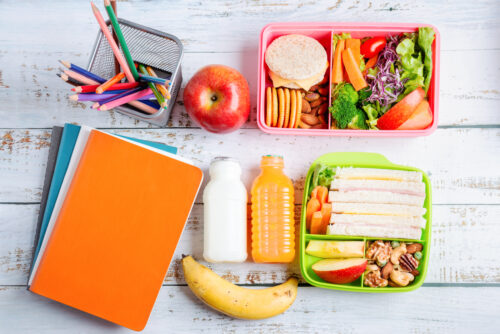
The aim is a mix of food groups, so kids have energy to learn and play. Include the following for a good balance of foods that will sustain them through the day:
- grain or wholegrain base
- fruit
- vegetables
- protein
- dairy or calcium-rich alternative
- water bottle
If you are relying on packaged snacks, try to keep them as the ‘extra’, not the whole lunch. A useful rule of thumb is to include mostly core whole or minimally processed foods and keep packaged items to around one a day, where you can. Need some more help? Refer to our lunchbox guide for more useful packing tips.
After-school: the hunger zone
Many kids come home ravenous, especially if lunch was small or they were too busy playing to eat much. This is where planned snacks help.
Aim for a snack that includes protein plus fibre, so it is satisfying but does not replace dinner:
- fruit plus yoghurt
- wholegrain crackers with cheese
- hummus with veggie sticks
- milk plus a banana
- a small sandwich with egg, chicken or cheese
If you want a week’s worth of ideas, see The ultimate guide to healthy after-school snacks for kids
Dinner: keep it familiar and flexible
Dinner is where many families get more vegetables and protein in, but it does not need to be perfect. Aim for a pattern most nights:
- half the plate vegetables (or veg in the meal)
- a protein food
- wholegrain carbs or starchy veg
- water with the meal
If vegetables are a struggle, keep offering them in different forms and keep the mood calm. Kids often need time and repeated exposure.
Drinks and treats
For primary school kids, water is the best main drink. Milk can fit in as part of a snack or after meals. Juice, cordial and soft drinks are best kept occasional, not every day. Although, if your kid isn’t great at eating fruit, a small glass of 100 per cent fruit juice per day is okay.
Healthy nutrition for teenagers
Teen years are a high-demand stage. Growth spurts, sport, long days, late nights and more independence all affect eating. Many teens are also grazers, which can look like constant snacking but still leave them under-fuelled for the nutrients they need.
The aim is to help teens build a pattern they can manage themselves, not to police every choice. A practical way to frame it is: fuel for energy, fuel for recovery and nutrients that support growth.
What to boost at this age
1 Calcium-rich foods
Teen years are a key time for bone building. Many teens do not get enough calcium-rich foods, especially if they drop milk, skip breakfast, or rely on energy drinks and snack foods.
High calcium foods include:
- milk, yoghurt, cheese
- smoothies made with milk or calcium-fortified soy milk
- yoghurt as an after-school snack
- calcium-set tofu and calcium-fortified alternatives if dairy is not used
2 Iron-rich foods
Iron needs rise in the teen years, especially for girls who have started menstruating. Low iron can show up as fatigue and poor concentration.
Iron-rich foods include:
- lean meat, chicken, fish, eggs
- legumes or iron-fortified cereals
- also pair plant-based iron foods with vitamin C foods (fruit, capsicum, tomato) to help iron absorption
3 Protein at meals and snacks
Protein supports growth and helps teens feel satisfied, which can reduce constant grazing on snack foods.
Protein sources include:
- eggs, yoghurt and milk,
- chicken and fish
- tofu, legumes, nuts and seeds
4 Whole grains and fibre
Whole grains support steadier energy and gut health, and help teens stay fuller for longer.
Think: oats, wholegrain bread, brown rice, wholegrain pasta, high fibre cereals, legumes.
5 Vegetables and fruit
Teens often drop vegetables first when life is busy. Rather than aiming for a perfect plate, aim for simple wins: fruit at breakfast or as a snack, vegetables at dinner, and one veg option in lunch.
The teen food routine that usually works
Breakfast that last
If a teen skips breakfast, they often get very hungry mid-morning and rely on snack foods. The most helpful breakfasts include wholegrains plus protein.
A lunch that is not just snacks
Encourage a lunch that includes a main item (sandwich, wrap, leftovers) plus fruit and a yoghurt or other protein food. If they buy lunch, help them choose a ‘main plus veg sides’ pattern.
After-school fuel
For sport or long afternoons, the goal is a snack that supports recovery without replacing dinner:
- yoghurt and fruit
- smoothie
- mixed nuts
- sandwich or toast with eggs
- milk plus wholegrain cereal
- hummus with crackers and veg
Dinner as the safety net
Dinner is often where teens get their best nutrition. Keep it family-style where you can, with vegetables, whole grains and protein as routine.
Drinks that derail teens
Energy drinks, sugary iced coffees and soft drinks can become daily habits. They add a lot of sugar and caffeine and they can crowd out water and milk. If you want one simple change to prioritise, it is water as the main drink.
Independence without food battles
Teens do better when they have ownership. Practical ways to support that:
- ask them to choose two breakfast options they will actually eat
- help them build a short list of snacks that work after school
- teach two or three simple meals they can make themselves
- keep the kitchen stocked with basics, not just snack foods
Special diets
Food allergies and intolerances
Food allergy is an immune reaction. Intolerance is different and does not involve the immune system in the same way. Common allergy triggers include egg, peanuts and other nuts, milk, shellfish, fish, soy and wheat.
If you suspect an allergy, it is important to seek medical advice rather than self-diagnosing, to avoid missing out on important food groups unecessarily. Allergic reactions can be serious, and testing and diagnosis should be guided by a health professional.
Vegetarian kids
A varied, balanced vegetarian diet can support children’s nutrition, but it helps to be intentional about key nutrients.
If your child is vegetarian, focus on:
- plant protein spread across meals and snacks (eggs, dairy, legumes, tofu)
- iron-rich foods (legumes, leafy green eggs, fortified cereals)
- vitamin C with meals to support iron absorption
- calcium sources (dairy or fortified alternatives).
A practical first step is to audit what they already eat, then fill gaps using familiar foods rather than trying to overhaul everything at once.
When to talk to a health professional
Most feeding issues are normal and pass with steady routines. It is still worth checking in with your GP, dietitian, or child health nurse if:
- growth, weight, or energy levels concern you
- your child’s diet is very restricted, especially across food groups
- mealtimes are consistently distressed or conflict-heavy
- you suspect a food allergy or ongoing intolerance
- you are worried about body image, bullying or dieting behaviour.
FAQs
How many snacks should kids have?
Many kids do best with three meals plus one or two planned snacks, especially preschoolers with small stomachs. Snacks work best when they are part of routine, not constant grazing.
Are packaged snacks always bad?
Not necessarily, but they can add a lot of sugar and salt if they become the default. A practical approach is to keep packaged snacks occasional and lean on simple whole or minimally processed options like fruit, yoghurt, wholegrain snacks and dips, most days.
Is juice a good way to get fruit and veg in?
Whole fruit is usually the better option. Juice is high in sugar and does not provide the same fibre, so it is best kept occasional. For preschoolers, juice is not recommended. But, if your child doesn’t eat much fruit, a small glass of 100 per cent fruit juice can help top up this shortfall.
What if my child refuses vegetables?
This is common. Keep offering vegetables without pressure, include them in family meals, involve kids in shopping and cooking, and try variety of types and how you prepare them. Start with small serves, keep offering veg without pressure, and use familiar formats (raw sticks, grated into meals, roasted, soups). Repeated exposure matters more than one ‘good’ day.
Is it okay to talk to kids about weight?
A safer approach is to focus on health-supportive routines and avoid shame or dieting language. Be alert to teasing, bullying and body image concerns and seek support if you are worried.
Is it okay if my child eats fruit but not vegetables?
Kids often prefer sweeter foods like fruit over veggies, which are essential to good nutrition. A practical approach to up their intake is to keep offering vegetables in different ways, involve kids in choosing and preparing them, and focus on variety over time rather than daily perfection.
What if my kids only want processed foods?
When ultra-processed foods become the default, gradual change can help get more nutrient-rich foods back on their plates. Keep family meals steady, keep offering healthy foods regularly and reduce the reliance on packaged options without turning it into a battle.
Article sources and references
- Food and nutrition guidelines for healthy infants and toddlers (aged 0–2 years): A background paper (Ministry of Health, NZ) https://www.health.govt.nz/system/files/documents/publications/food-and-nutrition-guidelines-healthy-infants-and-toddlers-revised-dec12.pdf
- Food and nutrition guidelines for healthy children and young people (aged 2–18 years): A background paper (Ministry of Health, NZ) https://www.health.govt.nz/system/files/documents/publications/food-nutrition-guidelines-healthy-children-young-people-background-paper-feb15-v2.pdf
- Healthy eating for infants, children and teenagers (Eat for Health, Australian Dietary Guidelines) https://www.eatforhealth.gov.au/eating-well/healthy-eating-throughout-all-life/healthy-eating-infants-children-and-teenagers
- Food neophobia and ‘picky/fussy’ eating in children: A review (Appetite) hhttps://www.ncbi.nlm.nih.gov/pubmed/17997196
- Repeated exposure to food and food acceptability in infants and toddlers: a systematic review https://pubmed.ncbi.nlm.nih.gov/30982874/
- Parental influence on eating behaviour: conception to adolescence (Journal of Law, Medicine & Ethics) https://www.ncbi.nlm.nih.gov/pubmed/17341215
- Food allergy: Epidemiology, pathogenesis, diagnosis, and treatment https://pubmed.ncbi.nlm.nih.gov/24388012/
- Food Allergy and Intolerance: A Narrative Review on Nutritional Concerns https://pmc.ncbi.nlm.nih.gov/articles/PMC8152468/
- Ultra-processed food exposure and adverse health outcomes: umbrella review of epidemiological meta-analyses (BMJ) https://www.bmj.com/content/384/bmj-2023-077310
- Physical activity and exercise guidelines for all Australians https://www.health.gov.au/topics/physical-activity-and-exercise/physical-activity-and-exercise-guidelines-for-all-australians
- Children’s health hub https://www.healthyfood.com/life-stage/childrens-health/
- A solid start to life https://www.healthyfood.com/advice/a-solid-start-to-life/
- Growing pains: Nutrition for preschoolers https://www.healthyfood.com/advice/growing-pains-nutrition-for-preschoolers/
- Ideal school lunches for every age https://www.healthyfood.com/advice/ideal-school-lunches-for-every-age/
- Back-to-school special: How to pack a healthy lunchbox https://www.healthyfood.com/advice/back-to-school-special-how-to-pack-a-healthy-lunchbox/
- The ultimate guide to healthy after-school snacks for kids https://www.healthyfood.com/advice/the-ultimate-guide-to-healthy-after-school-snacks-for-kids/
- Turn your family into healthy snackers https://www.healthyfood.com/advice/turn-your-family-into-healthy-snackers/
- 10 ways to help your fussy eater https://www.healthyfood.com/advice/10-ways-to-help-your-fussy-eater/
- How to turn around a fussy eater: Kids https://www.healthyfood.com/advice/how-to-turn-around-a-fussy-eater-kids/
- Fussy eaters: When should you worry? https://www.healthyfood.com/advice/fussy-eaters-when-should-you-worry/
- Is it OK if my child eats lots of fruit but no vegetables? https://www.healthyfood.com/advice/is-it-ok-if-my-child-eats-lots-of-fruit-but-no-vegetables/
- My kids only want to eat processed foods. How can I get them eating a healthier and more varied diet? https://www.healthyfood.com/advice/my-kids-only-want-to-eat-processed-foods-how-can-i-get-them-eating-a-healthier-and-more-varied-diet/
- 6 smart swaps to boost iron for kids https://www.healthyfood.com/healthy-shopping/6-smart-swaps-to-boost-iron-for-kids/
- What’s the difference between a food allergy and an intolerance? https://www.healthyfood.com/advice/whats-the-difference-between-a-food-allergy-and-an-intolerance/
- Step-by-step food allergy diagnosis https://www.healthyfood.com/advice/step-by-step-food-allergy-diagnosis/
- How to support a vegetarian childhttps://www.healthyfood.com/advice/how-to-support-a-vegetarian-child/
- I think my child’s weight is affecting their health. How can I best support them? https://www.healthyfood.com/advice/i-think-my-childs-weight-is-affecting-their-health-how-can-i-best-support-them/
www.healthyfood.com

 Achieve your goals
Unlock your ultimate healthy eating toolkit
Get instant access to everything you need to plan, shop and eat well in one place.